
by Emin Khateeb, Front-end Developer at Bitcoin Suisse
80% of hacking-related breaches are still tied to passwords. According to a recent report on data breaches, 1509 incidents, 448 with confirmed data disclosure, have occurred in the financial industry.
These numbers clearly indicate that cyber security continues to be a major issue around the world and in financial services in particular. But even as potential threats multiple, there are some simple measures which can help keep systems and users secure.
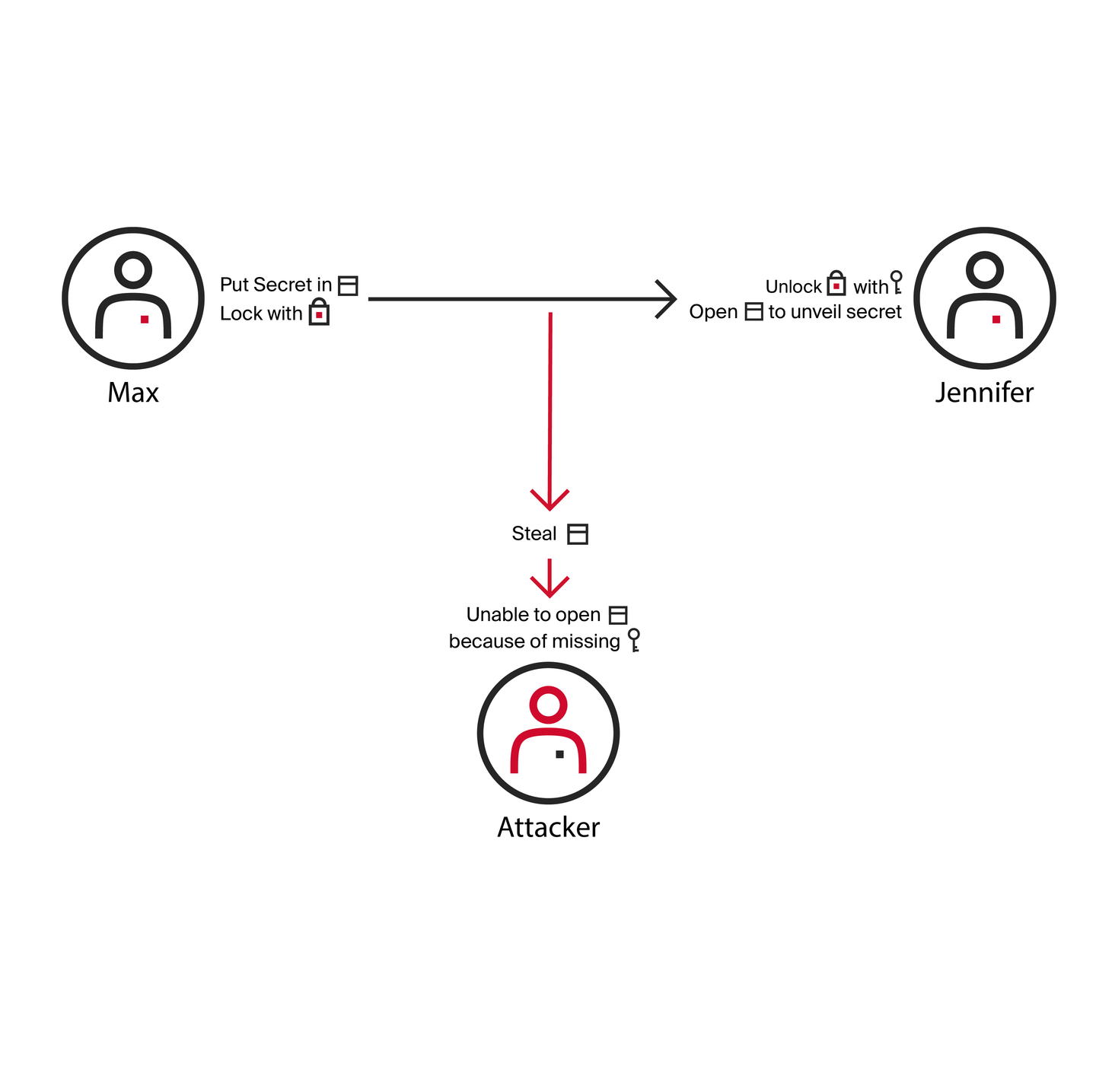
One of these is the use of Asymmetric Encryption for user data – a method which we also employ at Bitcoin Suisse. While some of the finer points of encryption might be hard to understand – we take the opportunity here to give a simple overview and help show you, our customers, how we work to protect you on a regular basis.
Let’s zoom in to look at Asymmetric Encryption and see how it works.
What does Asymmetric Encryption do?
Everything that is being transmitted over a network can be inspected and manipulated. But to do so, there are several barriers already baked into modern web browsers that an attacker would need to overcome before being able to access or change the data. One of these barriers is SSL, which is activated when you visit websites using the https protocol. For this reason, you see the hint below on the Bitcoin Suisse Online platform: