Background and initial roadmap: Ethereum 2
The transition from ETH 1 to ETH 2 will take place in several phases. A provisional roadmap provides a high-level overview. As new research is undertaken and as the technology evolves, the chronological order of the phases may change. However, the end goal remains the same: a fully functioning Ethereum network, running at scale, utilising PoS with full inclusion of smart contract capabilities and all the present functionality of the existing chain.
Below is an update on:
- the progression of the ETH 2 phases
- statistics on the adoption of staking
- proposed changes to the roadmap
- Other new developments.
Original, high-level ETH 2 roadmap (due to ongoing changes, the exact steps in each phase may vary):
Phase 0 – Beacon Chain: With the launch of the Beacon chain on December 1, 2020, ETH 2 began its official rollout and the first step in the move from Proof-of-Work (PoW) to Proof-of-Stake (PoS).
Phase 1 – Sharding: Sharding will expand the capability of Ethereum to process transactions and store data. The implementation of sharding itself will undergo several of its own phases as new features are added.
Phase 1.5 – Docking: ETH 1 mainnet will merge with the ETH 2 Beacon Chain and sharding. PoW will end and a full transition to PoS will take place as the original PoW Ethereum chain will exist as one of 64 shards alongside the Beacon Chain. Note that the sequences of these phases may change. Recent proposals suggest prioritizing the merger before sharding. See below.
Phase 2 – Full functionality: This phase is still less well-defined than the other phases. It is intended to be the final phase into a fully functioning ETH 2 blockchain. However, following recent potential changes in the roadmap and advances in scaling technology, it may be that this stage is reached at the end of phase 1.5. Phase 2 may then include ongoing updates as required.
The move to ETH 2 will have implications for scalability, security, decentralization, and economics. A key goal of the ETH 2 project is to be more scalable and secure while remaining decentralized. There are significant technical problems associated with achieving these three objectives of scalability, security and decentralization. The challenge can be summed up by the so-called scalability trilemma.
For the ETH 2 project, solving the scalability trilemma rests on two key concepts: Proof-of-Stake (PoS) and Sharding.
Learn More
Need more information on staking and Ethereum 2? Check out our resources:
The Three Biggest Changes Coming to Ethereum 2
Ethereum 2 Matters – Validators Economics
Ethereum and Its Transition to Ethereum 2
The Beacon Chain and Proof-of-Stake
The mechanics of Proof-of-Stake and the Beacon Chain has been covered here. More information on how to stake is included here.
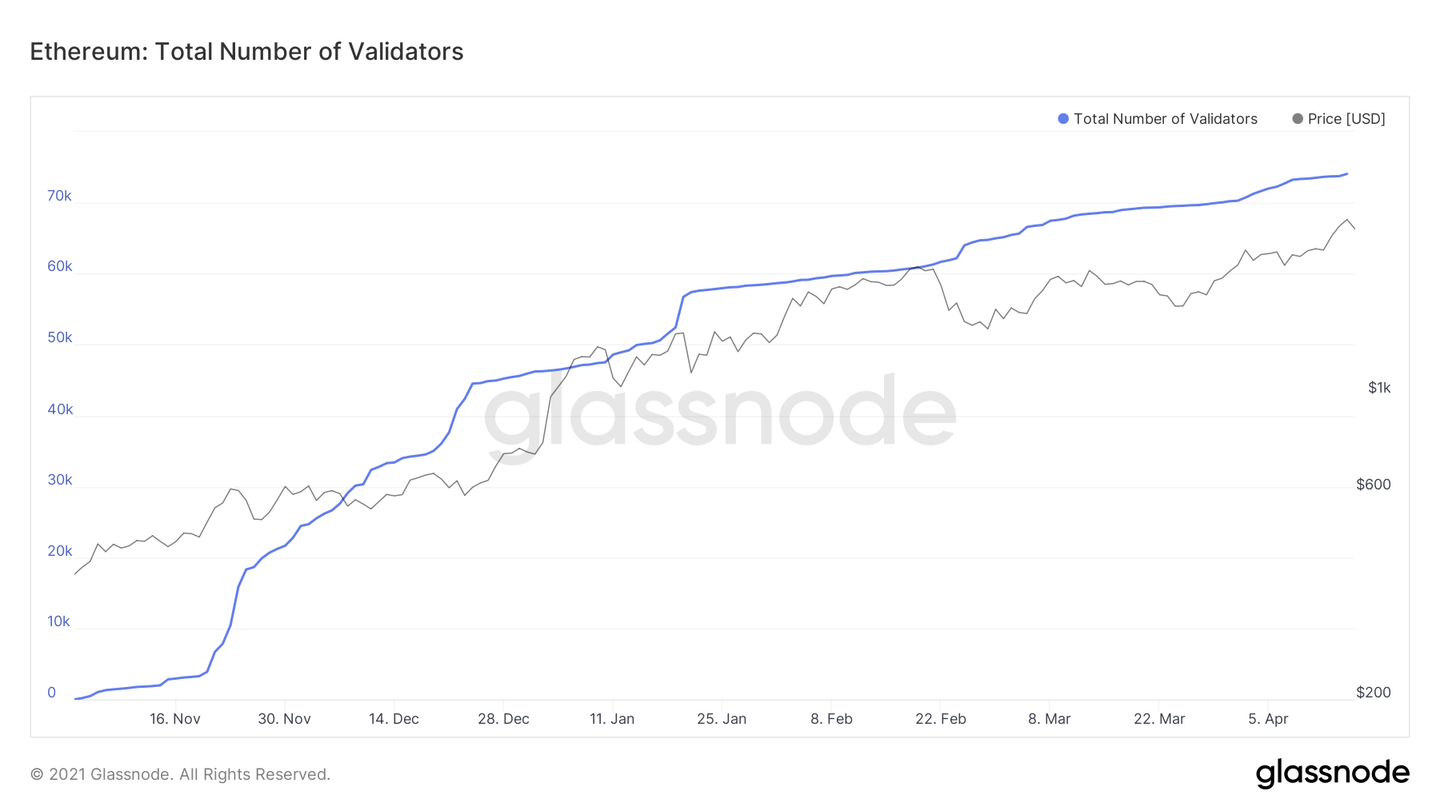
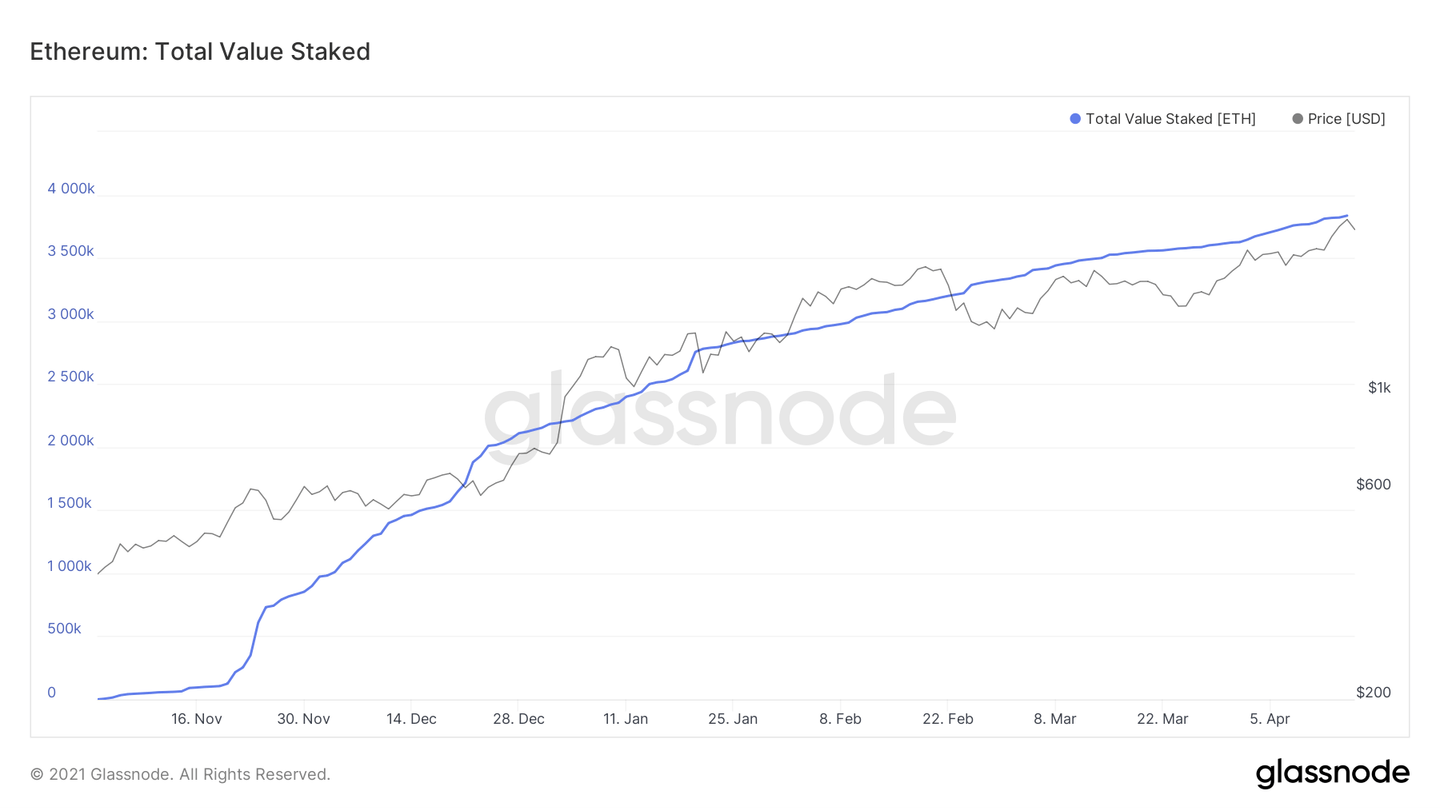
The launch of the Beacon Chain on December 1, 2020, marked the beginning of phase 0 and the opportunity to stake ETH and earn staking rewards. The required minimum amount of 524,288 ETH was staked by 16,384 validators.
After the Beacon Chain launch, the number of validators grew rapidly. To date, more than 4 months later, approximately 110,000 validators are staking on the Beacon Chain.