Listen to the Weekly Wrap on Spotify and Apple Podcasts. It is a summary with the help of AI-voices.


This Week’s Top Stories
“20 million BTC mined, leaving 1 million to be issued over the next 114 years.” – Monday, 9 March 2026
- A little over seventeen years after the Bitcoin genesis block, the network has surpassed the historic milestone of 20 million BTC mined. The milestone was reached at block height 939’999, based on the current 3.125 BTC block subsidy, after previously crossing exactly 95 percent of the total supply in November.
- We estimate that the final one million BTC will take more than a century to mine, with the smallest fractions expected to be issued around 2140, when the protocol reaches its hard cap of 21 million BTC.
“Clarity Act unlikely to advance before April. – Friday, 13 March 2026
- U.S. Senate Majority Leader John Thune said this week that the crypto market structure bill could face further delays because lawmakers may need more time to resolve outstanding issues.
- It seems that lawmakers are prioritizing President Donald Trump’s SAVE America Act. The bill would require Americans to provide documentary proof of citizenship to register to vote.
- Despite the uncertain timeline, we expect that the crypto market structure framework will likely still be a major market driver this year. As we mentioned previously, President Trump also weighed in earlier this month, saying that the Clarity Act is the “next step to finish the job” after the GENIUS Act.
A Quick Crypto Overview: The Crypto Market is Up This Week, With AI-Related Projects Outperforming
The crypto market is trading higher this week after a sharp drop last Friday afternoon and continued downward pressure over the weekend. Bitcoin bottomed above $65’000 last Sunday and is currently trading above $71’000, up almost 10 percent since Sunday evening, with Ethereum trading just below $2’100 at the time of writing. ETHBTC has traded rather flatly since the beginning of the month, with Bitcoin managing to increase its overall market dominance by 2 percent in March, while Ethereum dominance is flat on the month.
The S&P 500 and Nasdaq had a positive start to the week as well, with the S&P 500 increasing by more than 3 percent on Monday and Tuesday, and the Nasdaq by almost 5 percent, respectively. But both indices have since lost a big chunk of those gains and are now down roughly 3 percent from their Tuesday highs.
Gold and silver are roughly flat on the week after a short spike to the upside on Monday and Tuesday. Oil was the driving force behind the market moves over the weekend and during the first couple of days of the week. Over the weekend, oil futures spiked to almost $120 on Hyperliquid and, on Sunday evening, traditional oil futures followed suit, shaking up the broader market. Over the course of Monday and Tuesday, oil traded lower and bottomed above $75 on Tuesday, and has since continued to rally, currently trading at $96, up 25 percent from Tuesday’s low.
In the crypto space, TAO, RENDER, FET, and other AI-related crypto projects are up between 20 and 30 percent this week. Other than that, Hyperliquid (HYPE) is also up more than 20 percent this week, as the platform is capturing the majority of the perpetual DEX market share, and TRUMP is up 15 percent amid the announcement of another exclusive dinner for major token holders.
Chart of the Week: Industry Rollup Onchain Chart of the Month
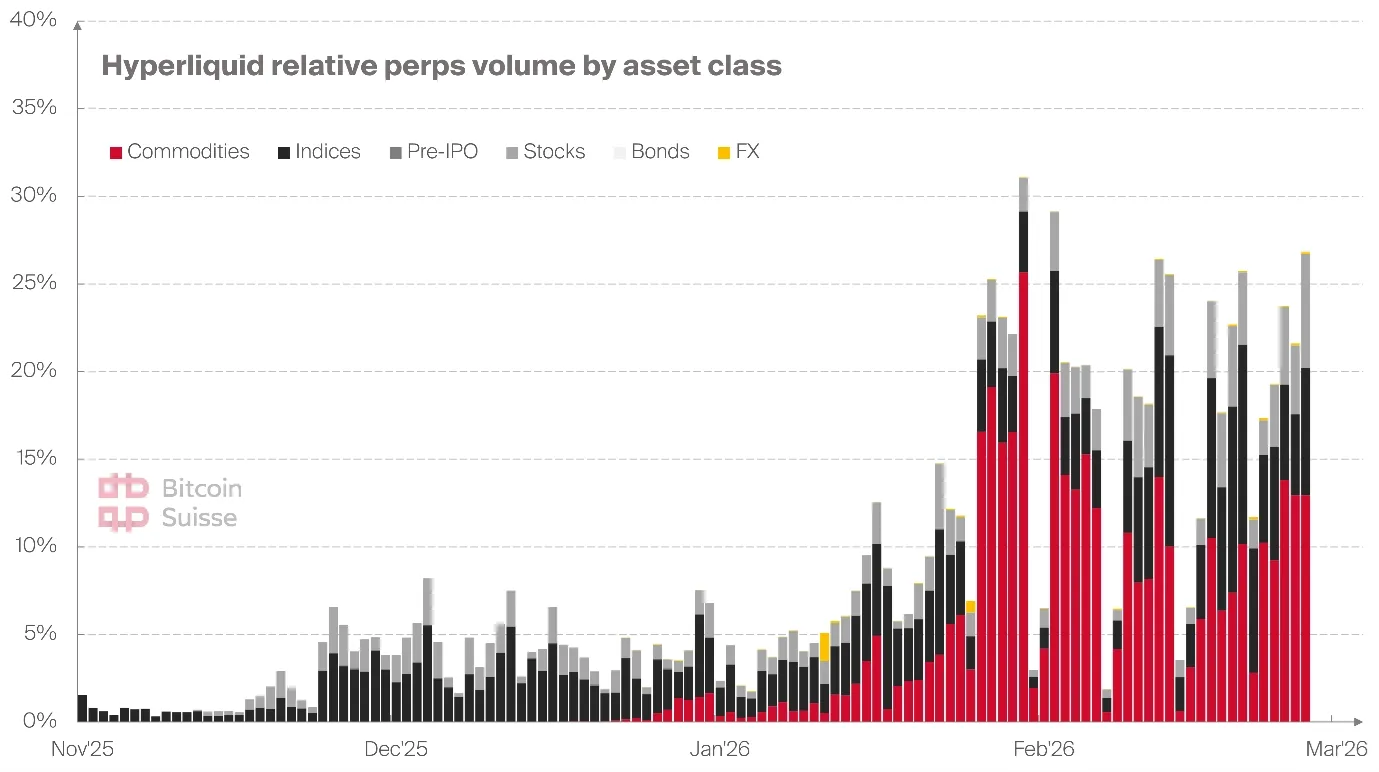
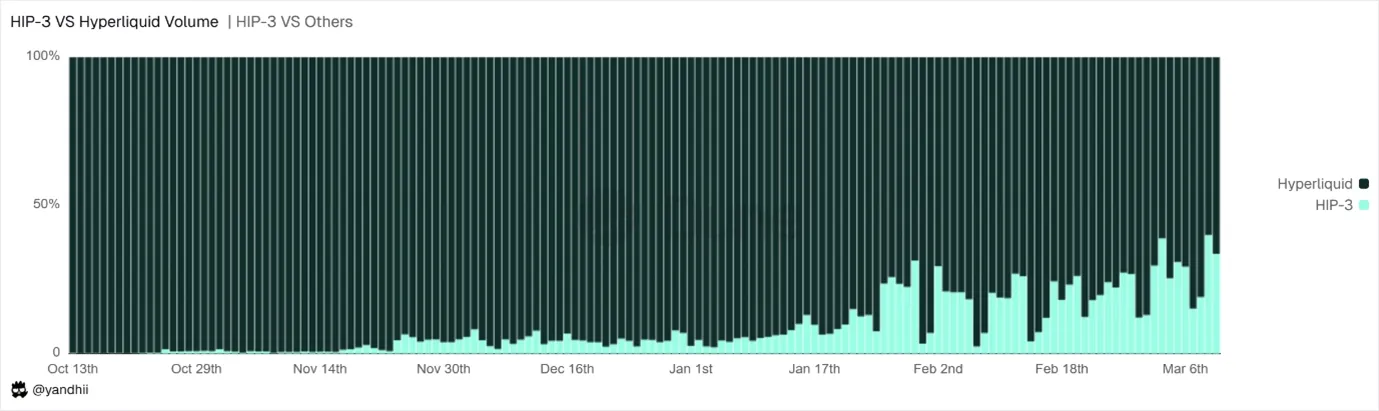
This week we want to highlight the onchain chart of the month from our March edition of the Industry Rollup report. We highlighted that the relative perpetual volumes on Hyperliquid show a clear regime shift since January, as non-crypto asset classes have been steadily gaining share, with peaks in February, when commodities alone approached ~25 percent of total perp activity.
The elevated volume in precious metal perps is closely linked to the current macro environment, where persistently high sovereign debt across major nations, geopolitical fragmentation, and declining confidence in fiat-based financial systems have pushed gold back into focus as strategic collateral.
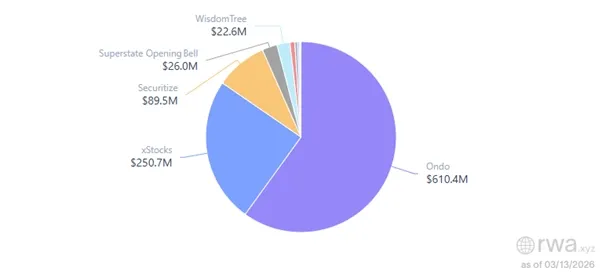
While the tokenization penetration rate remains negligible relative to global capital markets, forward projections range from ~$1 trillion to ~$10 trillion in tokenized assets by 2030, implying multi-order-of-magnitude expansion from current levels, and recent industry headlines are certainly reinforcing this trend.
The bottom line is that we are entering the financial era of blockchains. Crypto-native asset venues will transition toward generalized financial execution layers, and crypto assets will coexist alongside their legacy counterparts on the same distributed infrastructure.