This Week’s Top Stories
Listen to the Weekly Wrap on Spotify and Apple Podcasts. It is a summary with the help of AI-voices.


This Week’s Top Stories
“U.S. inflation rate fell to 3.5 percent in June, marking the largest decline since 2020.” Tuesday, 14 July 2026
- The annual inflation rate fell to 3.5 percent in June 2026, its first decline in five months, down from 4.2 percent in May and below the forecast of 3.8 percent, largely because the ceasefire between the U.S. and Iran caused energy prices to fall sharply.
- The 0.4 percent monthly decline in June 2026 was the largest in more than six years. Once again, it was almost entirely driven by the energy component reversing after the Iran conflict premium came out of oil prices.
- However, inflation risks could reignite in the coming months amid renewed hostilities between the U.S. and Iran this week and oil prices rising above $80 again.
- Treasury yields fell on Wednesday as traders weighed the milder than expected inflation report.
- The new Fed Chair, Warsh, mentioned that the Fed’s war against inflation is by no means over, but that there is good news from the front. He added that the probability of Fed rate hikes should continue to decline as inflation at the factory level trends lower.
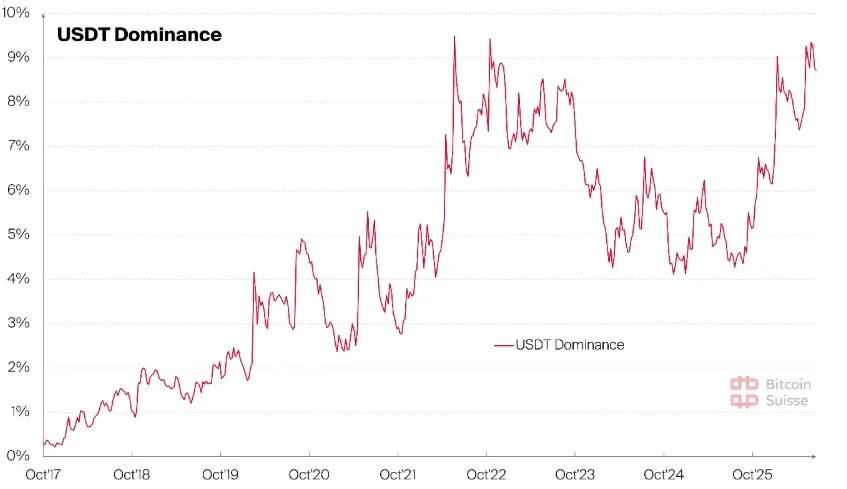
“Binance records $1.8 billion in USDC outflows, likely due to its failure to secure a MiCA license.” This week
- Since 1 July 2026, MiCA has required companies to hold an EU license to serve clients in the European Economic Area. Two large exchanges were affected by this new regulation. Binance has not yet obtained a license and had to suspend its EU services, with only withdrawals remaining available. Bybit is licensed, but its EU platform offers far fewer products than its global platform.
- Binance’s CEO stated that around 70 percent of the funds withdrawn from Binance by EU users were transferred to self-custody wallets, while only 30 percent were moved to regulated platforms compliant with MiCA.
- Binance recorded $1.8 billion in net USDC outflows in Q2 2026, including $1.4 billion in June alone, while its tracked USDC balance fell by 19 percent.
“Iran and the U.S. step up attacks, the Strait of Hormuz closes again and oil spikes above $80.” This week
- Iran and the United States exchanged intensified fire during a week of escalation that has called last month’s truce into question. For the first time since a memorandum of understanding paused the fighting last month, the United States launched two major waves of air strikes in a single day on Wednesday.
- The week of increasingly intense fighting has tested the limits of escalation that both sides established during four months of conflict before last month’s truce. The renewed escalation has once again largely halted traffic through the Strait of Hormuz.
- Brent crude climbed above $85 per barrel, representing an increase of roughly 11 percent, and is currently trading at around $80 at the time of writing.