
by Dr. iur. Cansu Burkhalter, Dr. iur. Fabio Andreotti, Oliver Gehrig
Since the emergence of Bitcoin in 2009, the adoption of crypto assets has grown rapidly, and they have become an integral part of the global financial system. Rapid proliferation of such new assets has triggered repeated calls for regulation. Regulatory concerns to date have focused mostly on consumer protection, anti-money laundering, countering terrorist financing and potential transmission channels to financial stability risk.
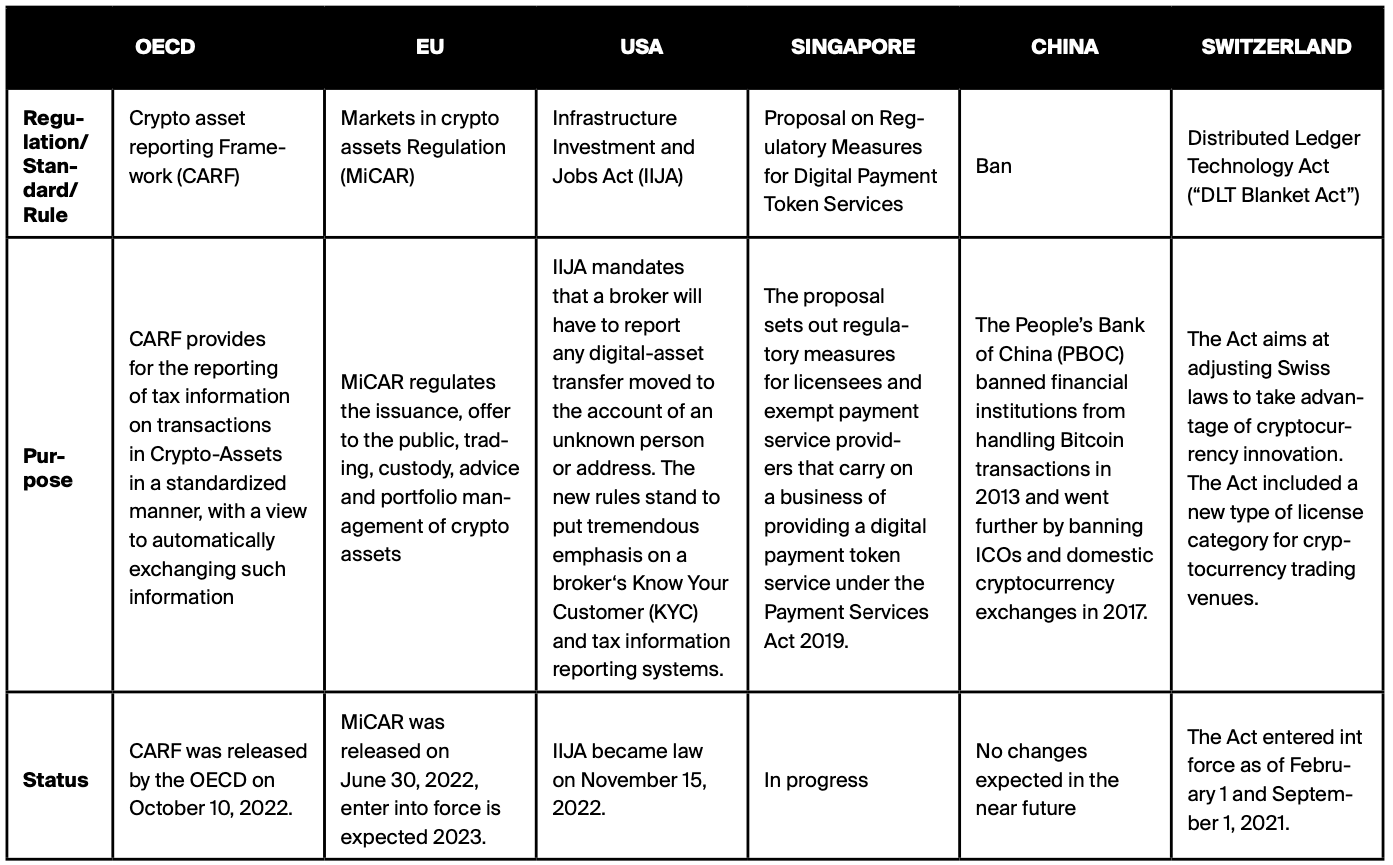
Policymakers worldwide struggle to monitor risks and implement consistent regulations in this rapidly evolving sector. Today, regulatory measures vary significantly by country: outright bans towards crypto exchanges in China or against privacy tokens in South Korea, consumer protection initiatives and certain regulatory guidance from US court rulings, a tax reporting standard from the Organisation for Economic Co-Operation and Development (OECD), anti-money laundering regulations from the EU, warnings about the risks of initial coin offerings (ICO) and regulatory approvals of crypto exchanges in Japan as well as adoption of Bitcoin futures contracts in the US.
Looking at the developments domestically, Switzerland became a stronghold for the crypto industry due to the neutral stance adopted by Swiss regulators regarding new and emerging technologies. Switzerland was one of the first countries to enact legal regulations for blockchain technology. Moreover, the Swiss Federal Tax Administration has clarified the taxation of crypto- currencies through a working paper in 2019, generally subjecting them to wealth tax and in some instances
income tax in a fair and transparent manner, thereby removing any ambiguity concerning taxation of crypto assets. Such initiatives create reliable and clear rules- based frameworks.
Crypto has also been associated with fraud and undue exuberance since its emergence. The early days of crypto were marked by hype and speculation, which led to the ultimate failure of some projects, causing financial losses for investors due to the lack of clear regulations. How- ever, as the industry has matured, we have seen many new successful projects offering genuine technological innovation. Regulations that are not unduly biased by bad actors but maintain a constructive approach towards an orderly integration of crypto assets into the existing financial system are key to promote further growth of the crypto industry.
Proportionality and technology neutrality are the core tenets of crypto regulations. A technology-neutral approach should be pursued regarding the regulatory treatment of blockchain activities that is proportionate to the level of risk. Wherever possible, any differences in legal treatment should arise from (and be tailored to) material differences in the business or risks associated with the technology. Prematurely created regulations that are excessively broad and overly complex would stifle the further adoption of crypto assets as a key component of the financial services industry.